Leather fails in predictable ways. The surface coating cracks first, then the hide underneath dries and splits, then a seam or panel gives way entirely. Each stage has a different honest answer, and that is where the myths start. A Pineville customer hears that a crack can be filled, a tear can be glued, and color can be sprayed back, and all three statements are sometimes true and sometimes a waste of money.
This piece sorts the common claims the way a shop like Davis Upholstery Shop has to sort them at the counter: true, false, or it depends on what the leather is actually doing under the damage you can see.
Start with what kind of damage you have
Surface cracking lives in the finish, not the hide. It looks like a network of fine lines, feels slightly rough, and shows most on arms, headrests, and the front edge of seat cushions where body oils and sunlight work together. The hide below is still flexible. That is the repairable kind. Deep cracking is different. Press the area and the lines open into splits, the leather feels stiff or papery, and flakes may lift at the edges. At that point the fibers themselves have broken down, usually from years of drying out, and no filler restores fiber strength.
Tears split into two camps as well. A clean tear along a seam, or a short cut with healthy leather around it, can often be backed, stitched, or patched from behind. A tear in the middle of a worn, thin panel tears again next to the repair, because the surrounding material is weaker than the patch. Color loss is the most misunderstood of the three. Fading from sun, wear that rubs the pigment thin on edges, and dye transfer from clothing all sit on the surface. Recoloring can address them, provided the hide underneath is sound and the original finish type allows new color to bond.
The claims, sorted
| The claim | Verdict | Why |
|---|---|---|
| A cracked armrest can be filled and recolored to look new | It depends | True for surface cracking in the finish. False for deep splits in dried, stiff hide, where filler sits on broken fibers and cracks again. |
| A torn seat can just be glued shut | False | Glue alone has no strength across a flexing tear. Lasting repairs are backed, stitched, or replaced at the panel level. |
| Faded color means the leather is worn out | False | Sun fade and edge wear are usually finish problems. Sound hide underneath can take new color well. |
| Conditioner will fix cracking | False | Conditioner helps dry but intact leather stay flexible. It cannot rebuild split fibers or reattach a lifting finish. |
| A patched panel will match the rest perfectly | It depends | Color can be matched closely, but grain, sheen, and wear differ between old and new leather, especially in direct light. |
| Some leather should not be repaired at all | True | Bonded leather with a peeling surface, and hide that is stiff and splitting across a whole panel, usually needs new material instead. |
When new panels are the honest answer
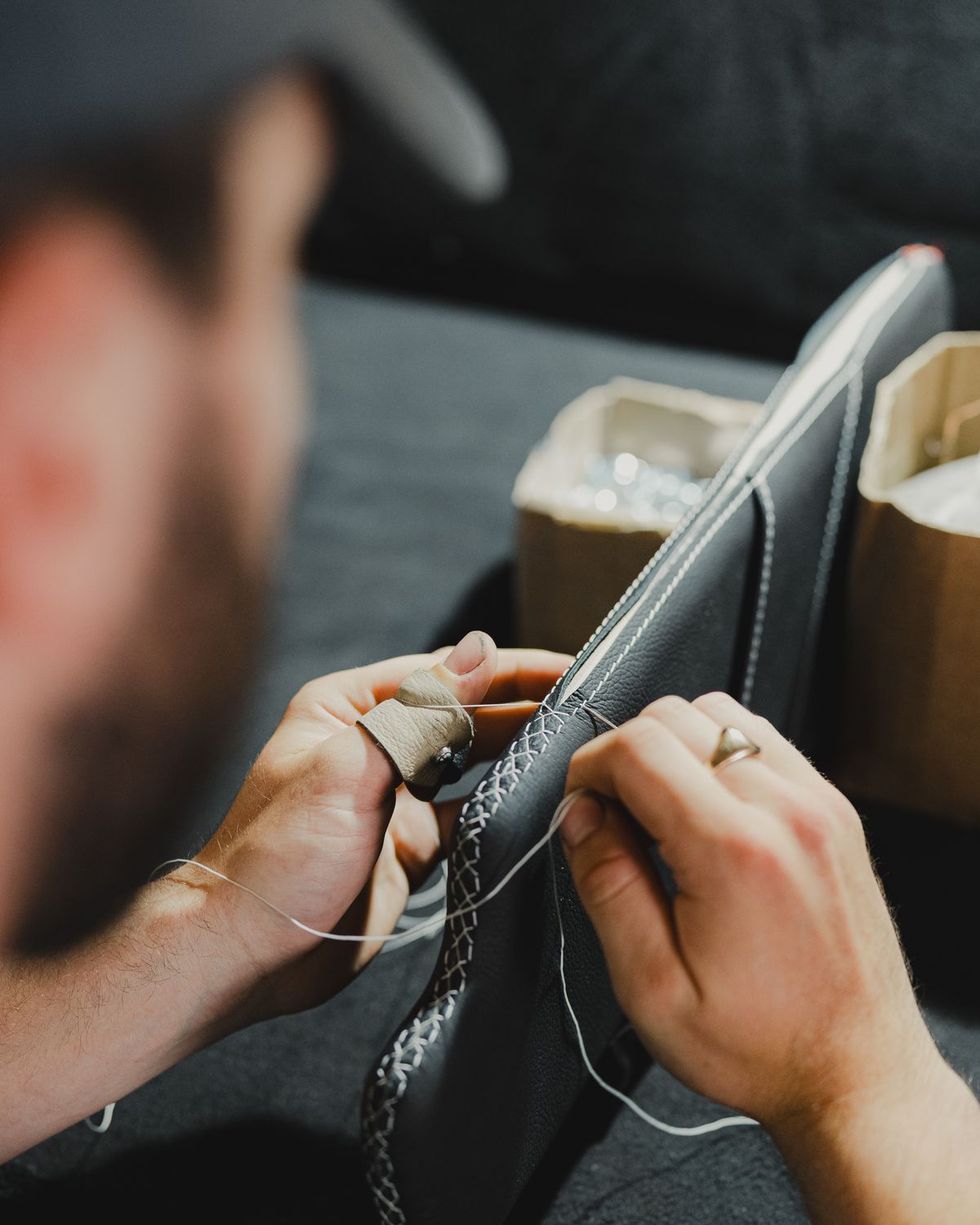
A panel replacement means removing the damaged section and sewing in new leather, matched for color and grain as closely as the hide supply allows. It sounds drastic, but it is often the middle path: the frame, cushions, and undamaged panels stay, and only the failed section is new. Seats that split across the sitting area, headrests worn through to the backing, and arms with cracking over large areas are the usual candidates. One caution on matching: leather is a natural material, and a new panel will age from a different starting point than the ten-year-old panel beside it. A good shop will show you the hide before it is cut, in daylight, so the match is a decision you made with your eyes open.
Keeping repaired leather alive in a Carolina house
Sun is the main enemy in Pineville homes. A chair in a south-facing window can fade on one side in a few summers, and heat from a nearby vent dries hide the same way. Keep leather out of direct midday sun where you can, wipe dust off with a dry cloth so grit does not grind into the finish, and clean spills promptly with a cloth dampened with water only. Harsh household cleaners strip finish faster than almost anything else. Conditioning once or twice a year is plenty for most furniture leather; more does not help and can leave a residue that attracts dirt.
Common questions
Can a cat scratch on leather be repaired?
Shallow scratches that only mark the finish usually blend well with cleaning and recoloring. Deep punctures and shredded areas need patching or a new panel, because the hide itself is cut through.
How long does a recolored panel stay looking right?
On sound hide, a properly bonded recolor holds up for years of normal use. It wears fastest exactly where the original did: front edges, arms, and headrests that see skin oils daily.
Is it worth repairing bonded leather?
Usually not. Bonded leather is a thin coated layer over ground-up material, and once it peels, there is no stable surface to repair. Recovering the piece in real leather or fabric is the durable route.
Photos in this guide are representative stock images.
← All guides from Davis Upholstery Shop← Back to Davis Upholstery Shop