Park a car outside through a few Pineville summers and the interior tells the story. The headliner droops onto your head at stoplights. The driver seat seam splits along the bolster. The top of the rear seat fades and turns brittle. None of this is the fabric wearing out on schedule. It is heat breaking down foam and adhesive, and ultraviolet light breaking down thread and surface coatings, year after year.
At Davis Upholstery Shop, the good news is that auto upholstery problems are separable. Each one has its own cause, its own fix, and its own point where a cheap repair stops making sense. Here is how to decide, problem by problem.
The sagging headliner, explained once
A headliner is three layers: a thin fabric face, a layer of foam, and a rigid board. The fabric is glued to the foam, and the foam is what fails. Heat and age turn it to powder, so the fabric lets go even though the glue and the fabric are both fine. This is why the common home fixes disappoint. Spray adhesive shot through the fabric sticks to crumbling foam and lets go again in weeks, and it often soaks through and stains. Pins and twist tacks hold the fabric up, and as a temporary measure they work, but they are holding up a symptom.
The real repair is removal. The board comes out, the dead foam is scraped off completely, and new foam-backed fabric is bonded to the clean board before it goes back in. Done that way, a headliner repair addresses the actual failed layer, and it should last roughly as long as the original did.
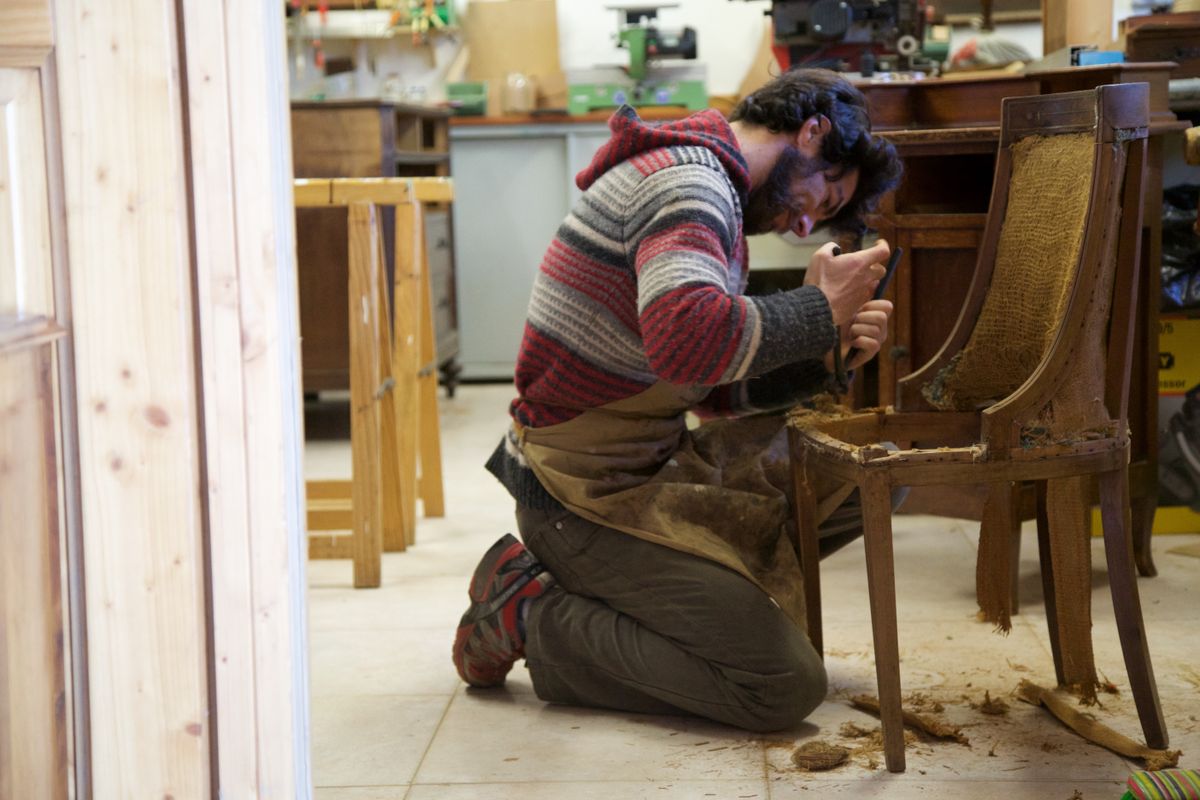
Seats: seams, bolsters, and cracked surfaces
Driver seats fail first, and they fail at the left bolster, where every entry and exit slides across the same few inches. A split that follows the stitch line usually means the thread failed or the material pulled through old stitch holes. If the surrounding vinyl or leather is still flexible, a single panel can be replaced and restitched, keeping the rest of the cover. Cracking across the sitting surface is a different diagnosis. That is the material itself drying and splitting, and restitching does not help because there is nothing sound to sew to.
Cloth seats have their own pattern: the foam underneath collapses before the fabric tears, so the seat feels lumpy and you sit lower, closer to the frame. Recovering over collapsed foam gives you a new cover on an old problem. Ask whether the foam needs rebuilding as part of the job, because on high-mileage driver seats it usually does.
| Problem | Usual cause | Sensible option | When to go further |
|---|---|---|---|
| Headliner sagging | Foam layer crumbled from heat | Strip the board and recover with new foam-backed fabric | If the board itself is warped or water-damaged, repair or replace the board first |
| Seat seam split at the bolster | Thread failure and sliding wear | Replace the one panel and restitch | If matching panels are also cracking, recover the whole seat for a uniform result |
| Cracked vinyl or leather seat surface | Sun and heat drying the material | Recover the seat in new material | Patching surface cracks is cosmetic and short-lived on a sitting surface |
| Seat feels lumpy and low | Foam collapsed under the cover | Rebuild or replace the foam, then recover if needed | A cover alone will not restore support or ride height |
| Faded rear seat top and rear deck area | Ultraviolet exposure through the back glass | Recover the affected panels | Window film rated for UV can slow the same damage on the new material |
Sun damage you can slow down
You cannot keep a car out of the Carolina sun entirely, but you can cut the dose. A windshield shade on a parked car drops interior temperatures noticeably and keeps the dash and seat tops out of direct light. Parking with the rear glass away from afternoon sun helps the headliner and rear seat, the two spots that fade first. For leather seats, cleaning matters more than products: grit ground into a crease acts like sandpaper, so a wipe-down with a damp cloth does real work. Conditioner a couple of times a year keeps leather flexible; daily-use protectant sprays mostly add shine and scent.
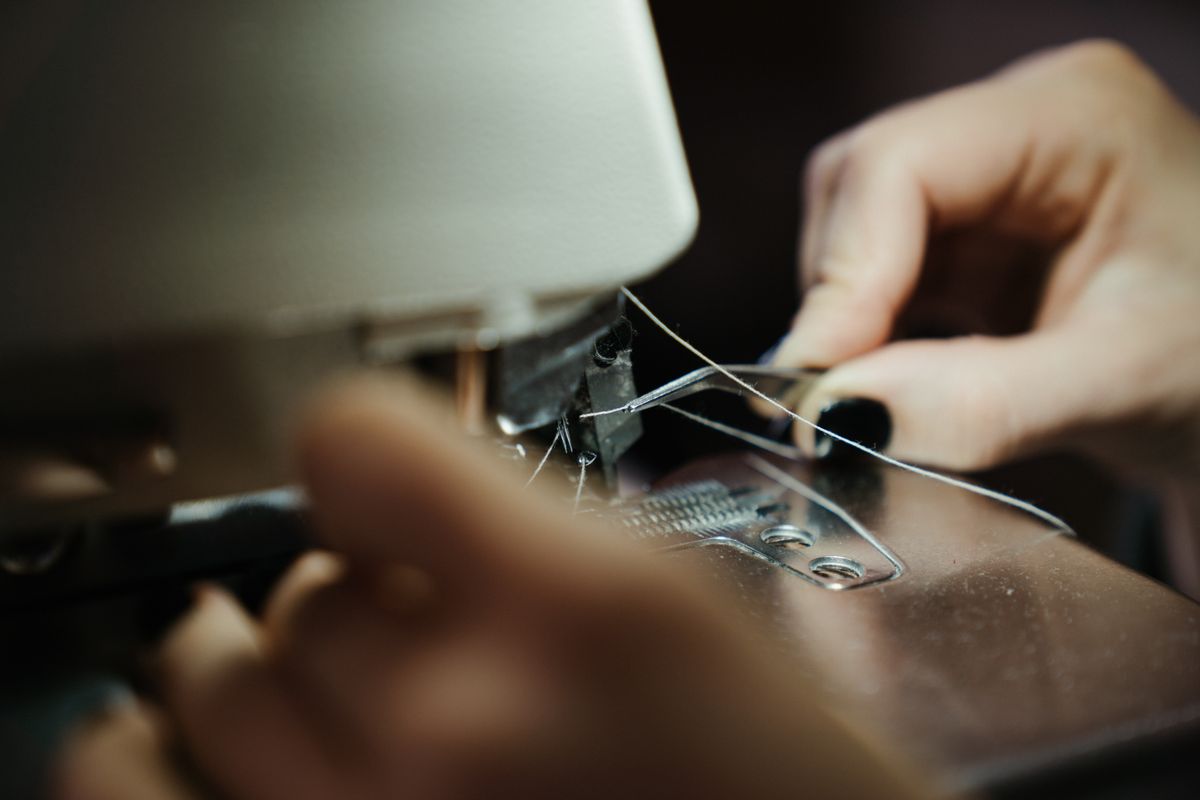
A note on matching and airbags
Two practical points before any seat work. First, matching: a ten-year-old interior has faded as a set, so one new panel will read slightly richer than its neighbors, most noticeably in bright light. Recovering both front seats together is the common way around it. Second, many modern seats have airbags built into the bolster, with seams designed to tear in a specific way. Seat work on those cars must preserve that seam design, which is a firm reason to use a shop rather than a generic slipcover that covers the seam entirely. Ask about it directly before the work starts.
Common questions
Can I fix a sagging headliner with spray glue?
Not durably. The foam under the fabric has crumbled, so glue bonds to powder and releases again, often staining the fabric. Stripping and recovering the board is the repair that lasts.
Why did my driver seat split but not the passenger seat?
Use, mostly. The driver seat takes every entry and exit, and the outer bolster takes the slide. It typically sees several times the wear cycles of the passenger side.
Will a recovered seat match the rest of my interior?
Closely, but rarely perfectly, because the untouched panels have faded over years. A good match is chosen in daylight, and doing both front seats together gives the most uniform result.
Photos in this guide are representative stock images.
← All guides from Davis Upholstery Shop← Back to Davis Upholstery Shop